Wednesday, June 23, 2010

Soros on German Austerity Planning

German Chancellor Angela Merkel unveiled austerity plans earlier this month for 80 billion euros ($107 billion) in national budget cuts over the next four years. Chancellor Merkel’s planning proposal prompted this ominous response by George Soros regarding the future of the European Union:
German policy is a danger for Europe; it could destroy the European project… Right now the Germans are dragging their neighbors into deflation, which threatens a long phase of stagnation. And that leads to nationalism, social unrest and xenophobia. Democracy itself could be at risk.
The larger lesson here for the world is that monetary contraction and austerity carry political risks that may be worse than the risks of monetary expansion and inflation. The austerity hawks are real, as are the political risks…


Source: Carrel, P & Brown, S (2010, June 23), Soros Says Germany Could Cause Euro Collapse, Reuters.

Tuesday, June 22, 2010

The Need for Postmodernization Strategies

Given the string of calamities suffered by enterprise and society over the past several years, the need for sustainable postmodernization strategies has become increasingly evident...


PS: I stopped adding photographs after reaching a dozen...

Deflation or Inflation...?

I maintain that monetary contraction (as in austerity measures) risks deflation and depression. Conversely, monetary expansion (as in "printing money") risks inflation and recession. Given an opportunity to choose between these two risks, I would choose monetary expansion and the risk of inflation.


Related Posts:

Using Inflation to Reduce Public Debt and Rout Entitlements

How High Can Inflation Go...?

Repairing Sovereign Indebtedness: Get Ready

Using Inflation to Erode the US Public Debt

Implications of the Financial Crisis

Nature by Numbers

My thoughts exactly...

Monday, June 21, 2010

The Currency of the Future...?

The US dollar has been the reserve currency of choice around the world for over half a century. However, Americans might want to become more familiar with the renminbi or Chinese yuan (sign: ¥; code: CNY), the official currency of the People's Republic of China (PRC). Beijing's announcement this weekend that China would loosen the yuan's de-facto peg to the US dollar essentially means that the yuan will likely begin to increase in value vis-à-vis the dollar. The relationship between the yuan and dollar will be a hot topic in the coming months as the US contends with what appears to be a less than spectacular economic recovery.

Saturday, June 19, 2010

The Good Life Comes in Moments...

An oriental lily in bloom [click to enlarge]

I took this photograph this morning on my balcony here in the mountains of Pennsylvania -- the good life comes in moments...

Thursday, June 17, 2010

Of Black Swans...

Who said black swans do not exist...

The infamous black swan...

Monday, June 14, 2010

Comparative Economics: US and Switzerland

Is there anything that the US might learn from Switzerland about monetary and fiscal policy...?


Source: DollarDaze.org

Sunday, June 13, 2010

All the Gold at Fort Knox

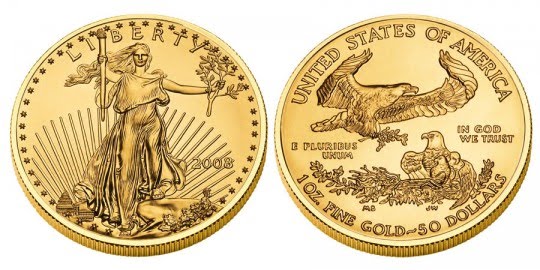
According to the US Mint, the US Bullion Depository at Fort Knox currently contains approximately 5,050 tons or 147.3 million troy ounces of pure gold bullion. At the current market price of $1,226.50 per troy ounce, the gold at Fort Knox can be valued at approximately $180.7 billion.


Related Posts:

What's in Your Wallet...?

In Fiat Currency We Trust

What's in Your Wallet...?

Some say that the discipline of philosophy has failed society with regards to two incisive questions of importance in our times. The first is, What is power? The second is, What is money? The second question has been occupying my time most recently.

So, what is money, really...? To find out, the first thing I did was take a closer look at the money in my wallet, after which I concluded that money looks about like money as always looked throughout my life (though I have noticed that money now includes various security measures intended to thwart counterfeiting).

I then went to the Internet to learn more about what money is. Since I had mostly $10 "bills" in my wallet, I focused my searches on the history of the $10 bill in America. Eventually, I found several images of different $10 bills that have been issued in the US and realized that none of the images were "bills" at all. Click on the images below and see for yourself...


The first image is a so-called "Federal Reserve Note," which Americans today use on a more or less daily basis. The second image is an older "Silver Certificate," which is no longer in circulation. The third is a still older "Gold Certificate," also no longer in circulation. Now that you have carefully looked over each, ask yourself:

Which currency would you prefer to carry in your wallet...?

My preference would be the Gold Certificate, thank you very much. As for the question of what money is...

Related Posts:

In Fiat Currency We Trust

All the Gold at Fort Knox

In Fiat Currency We Trust

According the the BusinessDictionary.com, a "fiat currency" is described as a:
Common type of currency issued by official order, and whose value is based on the issuing authority's guarantee to pay the stated (face) amount on demand, and not on any intrinsic worth or extrinsic backing. All national currencies in circulation, issued and managed by the respective central banks, are fiat currencies.
Note the use of the terms "official" and "authority," which are legalese for "government" and "law." Most Americans place great faith in both the government and law -- so much is at stake in our political economy...


Related Posts:

What's In Your Wallet...?

All the Gold at Fort Knox

No More Money!

I saw this posting on the Internet and have to share in the sentiments:
Let’s face it — no one in America has any money — the banks are broke — the pension funds are broke — the insurance companies are broke — social security is broke — Medicare is broke — the states are broke — the cities are broke — everyone is broke.

The reason that no one has any money is that there is no money around — I mean, if the government wanted everyone to have more money, they would just send it to them, right?

Has anyone seen any big stacks of money recently? There’s no money to earn, to spend, to loan, to borrow, to play with, there’s simply no money anywhere — the reason for this is that the government is trying as hard as it can to get rid of money.

My children asked me why we don’t have any money, and I told them that the government has decided that good people and good children have too much money already, and so the government is working as hard as it can to get rid of money — they understood perfectly.
This economics stuff is easy once you put your mind to it…

Saturday, June 12, 2010

Gold Accepted as Payment for Services Rendered

I was recently asked whether I accept gold as payment for services rendered in private consulting practice. The answer is, "yes."

Friday, June 11, 2010

How Much is the World Cup Worth...?

The FIFA World Cup trophy contains 11 pounds (6,175 grams) of 18 karat gold, which equates to 4,927 grams of pure gold. Today's spot price for gold is $1,226.50 per troy ounce, and since a troy ounce is equal to 31.1034768 grams, it follows that the current intrinsic value of the trophy is $194,285.85 ([4,927 / 31.1034768] * 1,226.50). However, I suspect that the various national teams now competing for the trophy in South Africa would probably pay a premium for this chunk of gold!


Source: FIFA Trophies

On Music Education in Detroit

Here are some excerpts from short essays written by students of Marc Haas, an orchestra teacher at Cass Technical High School in Detroit, whose teaching position terminates in August as the result of recent budget cuts in the Detroit schools:

Aspiring high school jazz musicians performing in Detroit
"Why I Play Music"

"Music should be in all schools, because some people do not have the freedom to express themselves. Sometimes all a child needs is to express themselves to be accepted in this world."

"Where I live is rough in the heart of the eastside there is no right path. So instead of selling drugs I practice and I practice hard whenever I'm frustrated and I feels I can't function through everyday life I play some music and my troubles melt away… I truly never thought that I would become this good at the cello…my parents love to hear me play now when at first I had to stay upstairs to play (now) they make me play for family and friends and everyone is amazed by my skill and how much I progressed. The point is that I can do anything regardless of my position. You can do it no matter what the odds because most people don't really know what it's like for me what I do when I leave Cass but I don't let it I interfere with my love for music."

"Music teaches me discipline. Music helps me establish a work ethic. Music isn't easy. It takes patience, hard work and dedication."

"Music is my way of communicating what it is that my mouth finds too hard to speak. With every aria I am able to release my inner passions. With every minuette, I am free to dance into a stupor. With every concerto I am able to let go of my anger. And with every overture I am able to overcome any and all obstacles. So when people ask why (she) plays music, she laughs and answers, 'So I can dream'."

"Music is a necessity to my life, it keeps me pushing to do better, and when you have to do that with even just one aspect of your life, it forces you to do the same with every other aspect. Why do I play music? I need to. I have to. Music is not an option."

"My parents don't tell me that they are proud of me a lot but when I play my cello for them and see the smile on their faces I know that they are proud of me for achieving something and learning how to play such a difficult piece of music."

"The people I've made memories with will be with me forever. Music brought all of us together to form this small family that has become one of the only reasons I still enjoy coming to school."
I commend Prof George Shirley's article and appeal linked below to everyone interested in music and the arts...

Source: Shirley, G (2010, June 9), Music Education in Detroit's Public Schools: The Struggle to Survive, New Music Box.